The Efforts to Improve Volleyball Underhand Passing Learning Outcomes Through the Problem-Based Learning Model
DOI:
https://doi.org/10.64131/cores.v2i1.68Keywords:
Problem-Based Learning, Underhand Passing, VolleyballAbstract
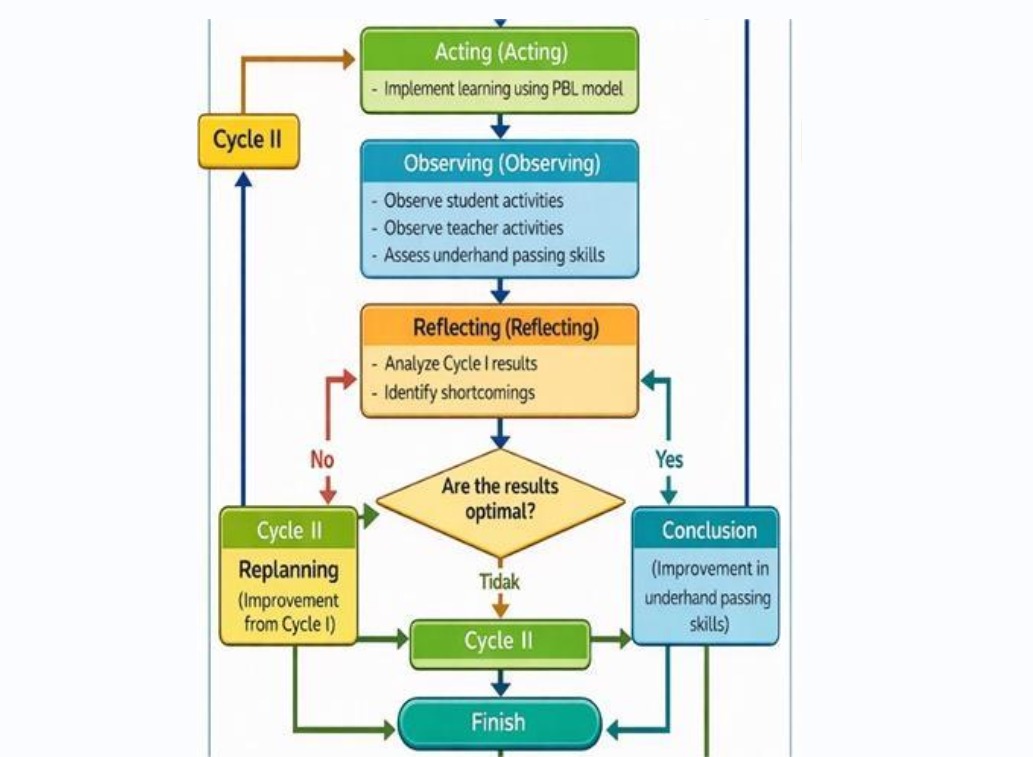
Background: Students’ mastery of basic volleyball skills, particularly underhand passing, remains relatively low due to limited engagement in learning activities, repeated technical errors, and learning outcomes that have not yet met the minimum mastery criteria. This condition indicates the need for an innovative learning model that actively involves students and emphasizes meaningful problem-solving in physical education learning. Aims: This research aimed to improve underhand passing skills in volleyball among fifth-grade students of SDN Terpadu 2 Unggulan Tana Tidung, North Kalimantan, through the implementation of the Problem-Based Learning (PBL) model. Methods: This research employed Classroom Action Research (CAR) using the Kemmis and McTaggart model, conducted in two cycles consisting of planning, action, observation, and reflection stages. Research instruments included observation sheets of student and teacher activities, an underhand passing skill performance test, documentation, and field notes. Result: The results showed a significant improvement in students’ underhand passing skills, increasing from 35% in the pre-cycle to 70.5% in Cycle I and reaching 84% in Cycle II. This improvement was supported by revisions in the learning process through drill exercises, the use of instructional videos, and the application of PBL focusing on real-world problem-solving activities. Conclusion: The implementation of the Problem-Based Learning model effectively enhanced students’ underhand passing skills, increased active participation, and fostered a more active, reflective, and contextual learning process. Therefore, PBL is an effective learning model for improving basic technical skills in physical education learning.
Downloads