A Relationship Between Daily Screen Time and Students Physical Activity
DOI:
https://doi.org/10.64131/cores.v1i1.57Keywords:
Screen time, Adolescent physical activity, PAQ-A, Sedentary behavior.Abstract
Background: The increasing use of digital devices among adolescents leads to increased screen time, which can reduce physical activity and increase sedentary behavior. However, the relationship between these two variables has not been consistent across studies, necessitating further study in different schools and environmental contexts. Aims: This research analyzes the relationship between daily screen time and students' physical activity levels. Methods: The study used a quantitative correlational design. The sample consisted of 22 students selected through a total sampling technique. The instruments used were the Screen Time Questionnaire (QueST) to measure screen time and the Physical Activity Questionnaire for Adolescents (PAQ-A) to assess physical activity. Data were analyzed using descriptive statistics, the Shapiro–Wilk normality test, and the Spearman Rank correlation test.
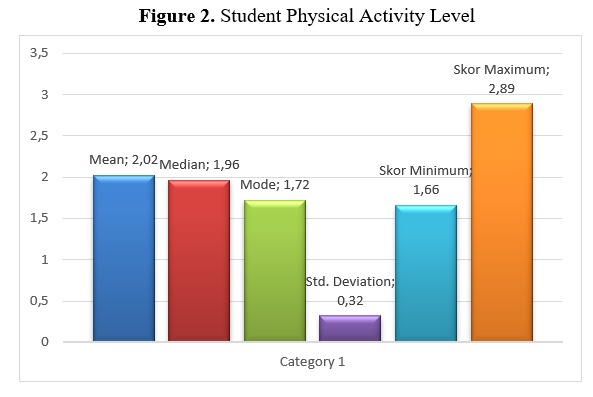
Result: The results showed that most students had moderate to high screen time, with low physical activity. The Spearman correlation test yielded an r value of –0.197 with a p value of 0.380, indicating no significant relationship between screen time duration and students' physical activity. Conclusion: This study concluded that screen time was not a determining factor in physical activity. Other factors, such as environment, exercise habits, and family support, likely had a greater influence on students' physical activity levels.
Keywords: Screen time, Adolescent physical activity, PAQ-A, Sedentary behavior.
Downloads