A CIPP Model: Evaluation of the Implementation of Junior High School Physical Education
DOI:
https://doi.org/10.64131/cores.v1i1.50Keywords:
Evaluation CIPP Model, Physical EducationAbstract
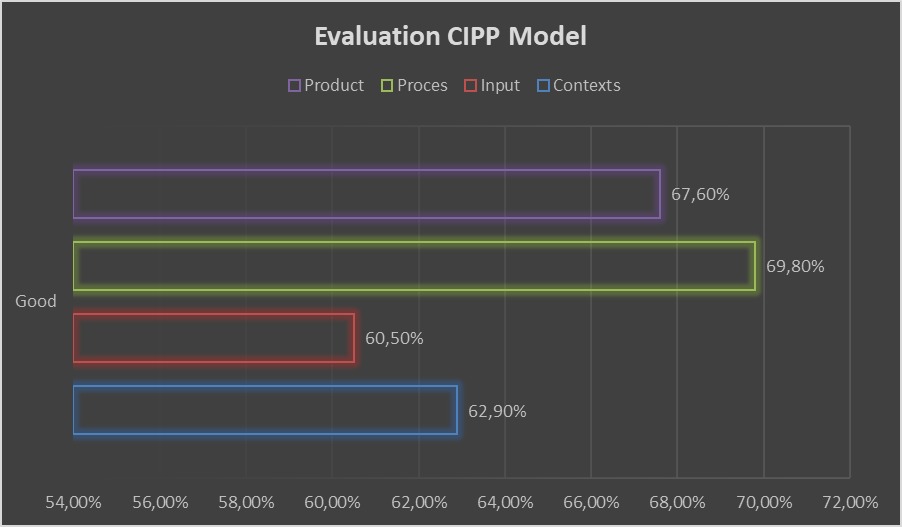
Background: This research aims to evaluate the improvement of students’ knowledge in Physical Education learning (PJOK) at junior high schools using the CIPP evaluation model (Context, Input, Process, Product. Aims: Provide data-based recommendations for improving the planning, implementation, and evaluation of PJOK learning to support continuous enhancement of program quality. Methods: This research employed a qualitative descriptive approach, with interviews, observations, and questionnaires serving as data collection methods. The study population consisted of 374 students from four schools, using a saturated sampling technique. Overall, the PJOK learning program was implemented in accordance with the standards set by Permendiknas No. 16 of 2007, Permendiknas No. 27 of 2007, and Permendiknas No. 22 of 2016. Result: The findings indicate that the PJOK learning programs in both public and private junior high schools across the two districts obtained a total score of 34,221 (65.2%), falling into the “good” category. Based on the CIPP analysis, the average scores were as follows: Context (11,762 or 62.9%, good category), Input (14,713 or 60.5%, good category), Process (5,219 or 69.6%, good category), and Product (2,527 or 67.6%, good category). Data were analyzed using qualitative and quantitative descriptive techniques, supported by inductive analysis grounded in field findings. Conclusion: The PJOK learning programs in public and private junior high schools in the Selorejo and Kesamben Districts are well implemented, with all CIPP evaluation components categorized as good, demonstrating successful program implementation in accordance with national standards.
Downloads